

Bathroom Remodeling Trends for 2026 in Carlsbad, CA Homes
For homeowners in Carlsbad, CA seeking bathroom remodeling companies in Carlsbad, CA, knowing current design and planning trends is crucial. This article explains the latest 2026 bathroom features—such as spa-inspired upgrades, smart fixtures, and eco-friendly materials—and covers budgeting, timelines, and practical choices. Readers will learn how local styles and real-world constraints influence bathroom renovations.
Spa-Inspired and Wellness Features
Modern bathroom remodels often include spa-like elements for comfort and relaxation.
- Wellness fixtures: Homeowners add steam showers, rain showerheads, soaker tubs, built-in shower benches, and heated floors to create a luxury feel.
- Design steps: Incorporating these features requires careful planning of plumbing, electrical, and ventilation. For example, installing a steam shower needs a steam generator hookup and exhaust to handle extra humidity.
- Space and cost: Tubs and large showers take more square footage and higher-end fixtures, raising project costs. A deep soaking tub may need reinforced floors and more cleaning. In contrast, a spacious walk-in shower with seating can be more practical for daily use.
- Limitations and mistakes: Adding spa upgrades can delay timelines and exceed budgets. Neglecting proper waterproofing or ventilation for steam features often leads to mold or damage. Skipping a licensed electrician for heated floors or chromotherapy lighting risks code violations.
- Budget impact: High-end spa fixtures (luxury shower systems, underfloor heating) add several thousand dollars. Simpler items like installing a rain showerhead may cost a few hundred extra dollars. Balancing splurges (e.g., on a steam unit) with essentials helps manage costs.
- Benefits: When done well, these additions improve daily comfort and resale appeal by creating a relaxing retreat. Poor execution, however, can lead to moisture problems or a mismatch with the home’s style.
Water-Efficient and Eco-Friendly Upgrades
Eco-conscious design is now expected in 2026 renovations, especially in drought-prone California.
- Eco fixtures: Popular elements include WaterSense-rated low-flow toilets and faucets, high-efficiency shower valves, dual-flush systems, and reclaimed or recycled materials. These reduce water use without sacrificing function.
- Planning: Choosing certified water-saving fixtures and possibly graywater reuse systems aligns with California codes. Local regulations often mandate flow limits (e.g., 1.2 GPM for showers). Installing high-efficiency fixtures may also require checking for rebates or permits.
- Performance trade-offs: Very low-flow fixtures save water but sometimes feel weaker; pick quality brands to balance flow and efficiency. For instance, modern low-flow showerheads can provide good pressure. Reclaimed wood vanities or bamboo can cut environmental impact, but may cost more upfront.
- Limitations: Premium eco-friendly materials and technologies (tankless water heaters, solar water preheaters) increase initial cost. Cheap “green” fixtures may underperform or fail. It’s important to verify WaterSense or Energy Star labels.
- Mistakes: A common error is installing a budget low-flow shower that splatters water. Also, overlooking ventilation can negate eco benefits by causing mildew (wasting energy on fans or repairs). Skipping the proper installation of dual-flush mechanisms can lead to leaks.
- Costs vs savings: Many water-efficient fixtures cost more initially but save money on utility bills over time. For example, a low-flow toilet might cost $50–$100 more than a standard model but can cut water use by a third. Rebates may be available for toilets or showerheads in Carlsbad.
- Consequences: Good eco-design reduces utility bills and helps comply with California drought rules. Neglecting efficiency can result in higher bills and may not meet future codes.
Smart Technology and Automation
Modern remodels often add smart features for comfort and convenience.
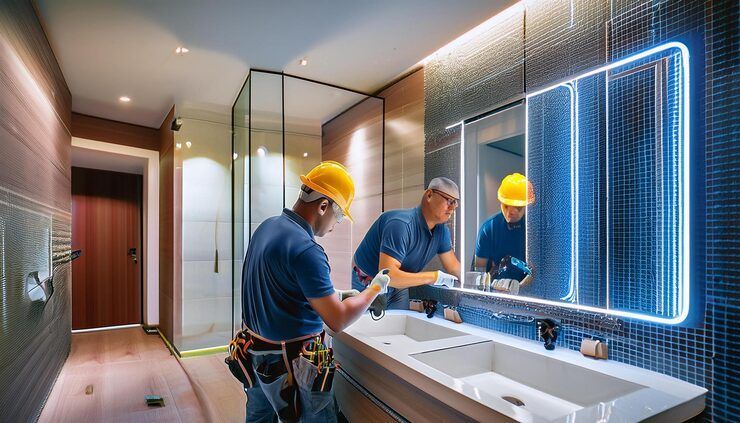
- Smart fixtures: Innovations include app- or voice-controlled showers and lighting, smart mirrors (with built-in lighting and displays), touchless faucets and toilets, and integrated climate controls. These automate routine tasks and improve hygiene.
- Integration process: Implementing smart tech requires electrical planning and connectivity. For example, a smart shower system needs both plumbing and a power source, and Wi-Fi coverage in bathrooms should be checked. It’s often wise to have professional installers handle wiring.
- Comparisons: Smart systems offer precise control (temperature presets, timers) but at a higher cost. Conventional fixtures are simpler and cheaper. For instance, a touchless faucet adds hygiene but costs more than a standard faucet.
- Limitations: Smart devices depend on electricity and software. Power outages or network issues can disable them if manual backups aren’t available. Also, not all users find digital controls intuitive. Ensure manual overrides (like lever handles) are still accessible.
- Mistakes: Overloading a remodel with tech can blow the budget. A mistake is picking trendy gadgets without need (like an expensive chromotherapy light that never gets used). Another is ignoring privacy/security: any internet-connected device should be secured.
- Costs: Smart fixtures and features add a high cost. For example, a smart mirror or LED panel mirror can run several hundred dollars, and sensor faucets start around $200–$300. These may save energy (e.g., LED lighting) but recoup costs slowly.
- Consequences: Well-chosen smart upgrades can increase daily ease and appeal, especially for tech-savvy buyers. However, if technology becomes outdated or malfunctions, it can frustrate users and possibly require replacement.
Color Palettes, Fixtures, and Material Trends
Current design trends favor warm, textured, and personalized finishes over stark uniformity.
- Color trends: Soft, muted palettes (sage green, warm gray, blue) and deep jewel tones (emerald, sapphire) are popular accents. All-white or high-contrast black-and-white schemes are declining. Warm neutrals bring a spa-like feel without feeling sterile.
- Fixture finishes: Matte black, brushed brass, and mixed-metal fixtures are in vogue. Instead of matching every faucet and handle, designers often layer finishes (e.g., a brushed gold faucet with black hardware) for a curated look.
- Materials: Natural textures like marble or quartzite countertops and stone-look or wood-look tiles add depth. Large-format tiles (with minimal grout lines) and patterned layouts (herringbone, geometric mosaics) are used as accents. Mixing tile shapes and textures helps personalize the space.
- Comparison – trendy vs timeless: While colorful tile or wallpaper can create a statement, they may date faster than neutral bases. Many homeowners choose neutral large tiles for walls/floors and introduce color through accessories (towels, artwork) to balance longevity with style.
- Limitations: Premium materials (natural stone slabs, custom cabinetry) increase cost significantly. Trending finishes (like hand-painted tiles) can also be costly and may not increase resale value. It’s important to match material quality to project scope.
- Mistakes: Overusing dark or busy patterns in a small bathroom can make it feel cramped. Excessive matching (all fixtures the same finish) can now feel dated. Open shelving in a bath often leads to clutter, so many prefer closed storage to keep the space tidy.
- Consequences: A timeless base (neutral walls, classic tile) with accent elements (a feature wall or decorative floor tile) can keep the look fresh. Conversely, choosing overly trendy colors or elaborate patterns may require an update sooner. Well-integrated materials (like durable quartz surfaces) add long-term durability and appeal.
Coastal and Regional Design Considerations
Carlsbad’s seaside location influences material and ventilation choices in bathroom remodels.
- Climate factors: Coastal homes deal with higher humidity and salty air. This makes strong exhaust ventilation and moisture-resistant finishes essential. For example, corrosion-resistant fixtures and mold-resistant drywall can prevent damage from sea air.
- Design style: Beach-inspired palettes (soft blues, sandy neutrals) and natural elements (stone, teak) reflect the local vibe. Tile and flooring choices often lean toward non-porous materials that tolerate moisture. Homes might use large windows or skylights for daylight, but privacy film or strategic placement is needed in bathrooms.
- Regional expertise: Local contractors and designers understand these needs. For instance, many bathroom remodeling companies in Oceanside, CA, advertise coastal-appropriate design, emphasizing tile floors and strong fans to counter humidity. Consulting nearby professionals can reveal trends and solutions suited to Carlsbad’s climate.
- Steps: Ensure any remodel includes high-capacity exhaust fans vented outdoors (not into an attic). Seal tile grout well and choose finishes labeled for bathrooms. Regularly inspect for mold or corrosion after updates, especially on outer walls.
- Limitations: Some coastal-style features (like rough-hewn wood or hanging plants) can deteriorate quickly in bath environments. Air conditioning systems in the home also help reduce humidity in warm months.
- Mistakes: Underestimating coastal moisture is a common pitfall. Skipping a humidity-sensing fan or using non-coated metals can lead to peeling paint, rust, or mold growth. Similarly, overdoing nautical themes (like wallpaper of shells) can feel kitschy rather than timeless.
- Costs: Upgrading to premium exhaust fans or marine-grade fixtures costs more than standard ones, but pays off by preventing costly repairs. Extra planning time for ventilation permits should be factored in.
- Consequences: Accounting for coastal conditions means the remodel will last longer with fewer problems. Poor planning can lead to premature failures (e.g., wood vanity warp or persistent mildew), undermining the renovation’s value.
Budgeting, Costs, and Project Timeline
Realistic budgets and schedules are key to a smooth 2026 remodel.
- Cost categories: Bathroom projects vary widely. In San Diego/Carlsbad, a small cosmetic remodel (new fixtures, tile) often runs $15,000–$20,000, a mid-range renovation around $20,000–$35,000, and a large custom overhaul can exceed $35,000–$50,000. These figures include materials (tiles, cabinetry) and labor.
- Budget planning: Early on, homeowners should set a detailed budget including a 10–20% contingency for surprises. Decisions like layout changes, high-end materials, or adding plumbing all increase costs. Working with a professional to get itemized quotes helps avoid underestimating.
- Timeline estimates: Typical timelines depend on the scope. A small guest bath update can finish in 2–3 weeks, a full remodel about 4–6 weeks, and larger jobs (changing room layout, custom elements) 6–8+ weeks. These are construction times alone; design and permitting add to the schedule.
- Permits and inspections: In California, most bathroom remodels require permits (especially for moving plumbing/electrical). Permitting can add 1–2 weeks (or more if inspections flag issues). Skipping permits risks fines and redoing work. Budget time for permit review when planning the project.
- Process steps: A typical sequence is design→demolition→rough plumbing/electrical→inspections→installation (tiles, fixtures)→final inspection. Using experienced local contractors usually keeps the project on track, while DIY or hiring multiple trades independently can stretch the timeline.
- Overruns and delays: Hidden issues (like mold behind old tile or outdated wiring) often emerge during demolition. These require extra repair, delaying completion and increasing cost. For example, if termite damage or rot is found, structure repair could double the expected timeline.
- Consequences: Accurate early planning and budgeting lead to fewer surprises. Underbudgeting or rushing design often forces compromises in quality or aesthetics. Conversely, adding a cushion in time and money usually results in a better outcome.
Common Renovation Mistakes and Maintenance
Awareness of pitfalls ensures a durable, cost-effective remodel.
- Overly trendy choices: Features like vessel sinks and large freestanding tubs, though eye-catching, can be impractical. Vessel sinks are harder to clean and may not fit limited vanity space; center-stage tubs may never get used and waste room. Relying on such “fads” can date the bathroom quickly or complicate cleaning.
- Ignoring local climate: Skipping robust ventilation or moisture-resistant materials in Carlsbad’s humid air often leads to mildew, peeling, and rust. Many remodelers warn that coastal bathrooms need fans vented outdoors and corrosion-resistant fixtures to prevent damage. Neglecting this can mean repainting or retiling far sooner than expected.
- Poor layout planning: Inadequate storage and cramped layouts are common regrets. Open shelving, while stylish, usually requires constant tidying and offers less storage than closed cabinets. Failing to optimize drawer and cabinet space often leads to cluttered counters. Ensuring the design includes sufficient accessible storage will avoid this problem.
- Underbudgeting and shortcuts: Using the cheapest finishes or skipping a licensed professional may reduce costs initially, but often backfires. For example, cheap grout or tile can crack, and unlicensed electrical work can cause failures. It’s wise to allocate more budget for reliable fixtures and labor: the adage “buy once, cry once” applies.
- Skipping permits: A critical mistake is proceeding without the required permits. Unpermitted work may need to be undone during a future sale inspection, costing twice. It’s safer to include permit fees and inspections in the plan upfront.
- Maintenance oversights: Choosing high-maintenance options (like marble that needs sealing, or wallpaper in a steamy bath) without knowing the upkeep leads to issues. Homeowners should consider lifetime maintenance when selecting materials. For instance, engineered quartz resists stains and requires little care compared to porous granite.
Conclusion
In 2026, bathroom design in Carlsbad blends comfort, efficiency, and style. Homeowners should weigh spa-like amenities, smart tech, and sustainable fixtures against budget and local conditions. By focusing on durable materials, realistic planning, and timeless accents, each remodel can enhance home value and everyday living. JB Home Improvement Inc. notes that aligning these trends with smart choices helps ensure a successful renovation.
Frequently Asked Questions
Q: What are the top bathroom remodeling trends in 2026?
A: Popular 2026 trends include spa-inspired upgrades (steam showers, rain showerheads, heated floors) for comfort, water-saving fixtures (low-flow toilets, showerheads) for efficiency, and smart technology (app-controlled lights/showers) for convenience. Warm, muted color palettes and textured materials (large tiles, mixed metals) are also in vogue. Local style often means incorporating coastal elements like stone and strong ventilation in Carlsbad homes.
Q: How much does a bathroom remodel cost in Carlsbad/San Diego?
A: Costs vary by scope. In the San Diego area, a small cosmetic remodel typically runs about
$15,000–$20,000, a mid-range renovation
$20,000–$35,000, and a full luxury remodel
$35,000–$50,000 or more. These ranges include labor and materials. Factors like layout changes, upscale finishes, and permits can push costs higher. Always get detailed quotes and include a contingency (10–20%) for unexpected expenses.
Q: What are common mistakes to avoid in a bathroom remodel?
A: Avoiding pitfalls saves money and hassle. Common mistakes include over-investing in purely decorative trends (like large standalone tubs or vessel sinks) that add cost but little function. Not upgrading ventilation or using moisture-resistant materials in a coastal climate is another big one, as it leads to mold or damage. Also, ensure adequate storage (hidden cabinets over open shelves) and realistic budgeting. Skipping required permits can cause legal and safety problems later.