

Popular Kitchen Remodeling Upgrades That Deliver the Best ROI
Homeowners often compare common upgrades to understand which kitchen improvements retain their value. This guide outlines practical upgrades linked to durability, usability, layout efficiency, and material performance, helping users identify which changes typically support higher resale outcomes.
When a Kitchen Remodeling Contractor Focuses on Practical ROI Drivers
ROI in Kitchen Remodeling is usually tied to visible durability, material longevity, functional workflow, and alignment with current buyer expectations. The upgrades that support ROI tend to address layout friction, worn surfaces, and energy performance rather than unnecessary additions.
- Replacement of worn or aging surfaces
- Improved work triangles between major stations
- Updates to aging mechanical or lighting components
- Layout adjustments that remove congestion
- Material selections that are easy to maintain
Kitchen upgrades demonstrate practical value when usability improves and future replacement costs are reduced.
Cabinet Refacing and Hardware Replacement
Cabinet refacing improves appearance and surface life without full cabinet reconstruction. It often aligns cost with noticeable visual improvement.
- Reuses existing cabinet boxes when structurally sound
- Adds new doors, drawer fronts, and veneers
- Updates color, finish, and visible condition
- Requires less downtime than a full replacement
Hardware upgrades complement refacing by improving handling, consistency, and appearance without affecting structure.
Countertop Replacement With Durable Surface Materials
Countertops have high visibility and daily use. Replacing worn or outdated counters adds functional stability and simplifies maintenance.
- Upgrades to materials with higher scratch resistance
- Reduces susceptibility to staining and etching
- Improves working clearance and uninterrupted surfaces
- Provides a clean transition for new sinks or fixtures
Replacing countertops often pairs with plumbing fixture updates for coordinated usability.
Updated Appliance Packages With Energy Performance Benefits
Appliances influence energy demand, daily function, and noise output. Updated equipment supports predictable performance and reduces maintenance frequency.
- Refrigerators with stable temperature control
- Dishwashers that operate efficiently at lower volumes
- Ranges or cooktops with consistent thermal output
- Ventilation systems that manage odor and grease
Selecting similar finishes and scale supports visual continuity and reduces future replacement mismatch.
Task, Ambient, and Under-Cabinet Lighting Improvements
Lighting upgrades increase visibility, reduce eye strain, and improve surface evaluation during food preparation. Layered lighting aligns performance with the designated workspace.
- Ambient overhead lighting for general visibility
- Task lighting over counters and prep zones
- Under-cabinet lighting that reduces shadows
- Updated fixtures sized for the overall proportion
Lighting improvements typically benefit kitchens with limited natural light or older fixtures.
Flooring Replacement for Durability and Water Resistance
Flooring experiences high wear. Updated materials help manage moisture, scratching, and load-bearing durability.
- Higher resistance to staining or denting
- Improved water resistance near sinks or dishwashers
- Uniform transitions between rooms
- Stable footing for frequent movement
Flooring updates usually accompany baseboard replacements for consistent material finishing.
Backsplash Replacement to Improve Cleanability
A backsplash protects vertical surfaces from grease and staining. Updated materials improve cleaning efficiency and long-term surface performance.
- Smooth joints or grout lines that resist absorption
- Materials that withstand heat in the near ranges
- Neutral designs that coordinate with countertop surfaces
- Reduced staining behind sinks
Backsplash upgrades require limited material volume and installation time relative to visual impact.
Sink, Faucet, and Plumbing Fixture Upgrades
Plumbing fixtures affect daily efficiency and water management. When valves or aerators age, performance declines.
- Reduced dripping and water waste
- More predictable pressure and temperature
- Improved washing clearance at sinks
- Surfaces that resist mineral accumulation
Fixture updates often accompany countertop removal, simplifying installation.
Peninsula or Island Conversions for Workspace Efficiency
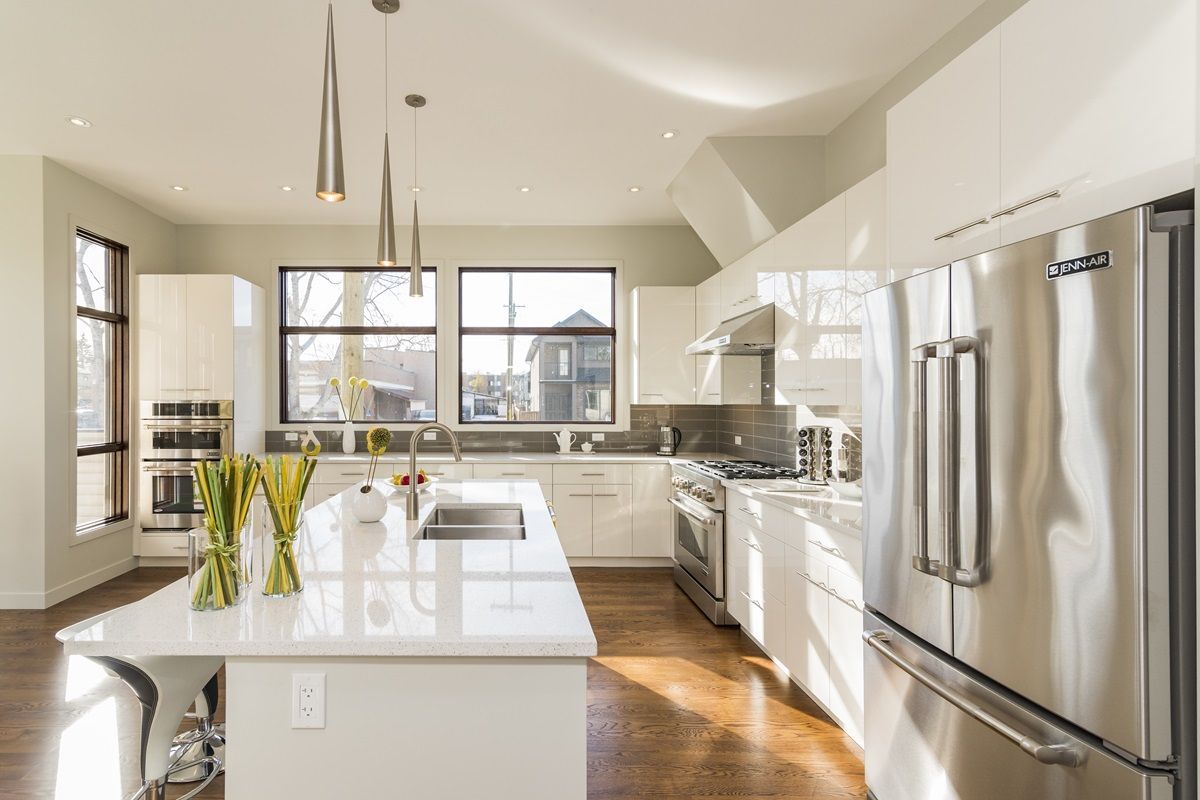
Peninsulas and islands expand usable surface areas and storage. They also adjust circulation patterns for cooking and cleanup.
- Added storage for cookware and utensils
- Additional seating for informal meals
- Increased staging room for preparation
- Defined barrier between cooking and traffic
Spatial expansions may be constrained by plumbing or appliance clearances.
Pantry Expansion or Storage Optimization
Storage affects organization and visual order. Pantries often support high ROI because they improve layout efficiency without major system changes.
- Additional vertical shelving
- Slide-out or pull-out mechanisms
- Dedicated bulk storage areas
- Improved accessibility for daily items
Pantry upgrades reduce countertop clutter and support systematic food organization.
Layout Adjustments That Improve Circulation
Layout efficiency correlates with movement, safety, and appliance interaction. Small reconfigurations produce measurable improvement without reconstruction.
- Widened clearances between high-use zones
- Relocated appliances to prevent overlap
- Adjusted refrigerator swing clearance
- Reduced corner interference near cabinetry
Minor layout changes are sometimes sufficient compared to a full redesign.
Ventilation and Hood System Improvements
Ventilation affects indoor odor control and airborne grease accumulation. Upgraded hoods improve air capture and reduce residue on surfaces.
- Higher capture rates at cooking stations
- Reduced smoke and particulate migration
- Better duct pathways to exterior exhaust
- Lower noise levels during operation
Ventilation improvements may extend appliance life by reducing heat and grease exposure.
Neutral Surface Selection for Broader Appeal
Neutral finishes may help maintain appeal across multiple buyer preferences. While design choices vary, balanced surfaces avoid unnecessary turnover.
- Midrange colors for cabinets
- Reduced pattern intensity for surfaces
- Limited visual contrast in small spaces
- Consistent finish across visible areas
This reduces the likelihood of aesthetic-driven replacement.
When to Consider Full Cabinet Replacement
Full replacement is appropriate when structural integrity or internal hardware has reached the end of service life. Visual assessment and hinge stability usually guide decisions.
- Cabinet boxes that warp or swell
- Hinges that loosen despite tightening
- Shelves that bow under standard weight
- Visible water damage underneath sinks
Replacement provides predictable future durability but may involve added cost and lead time.
Minor Structural Adjustments for Older Kitchens
Older kitchens may require framing reinforcement or subfloor correction before surface improvements. This avoids resurfacing over compromised structures.
- Joist support near islands
- Reinforcement under larger appliances
- Leveling for flooring installation
- Moisture mitigation at entry points
Structural alignment supports surface longevity.
When to Engage Kitchen Remodeling Companies
Professional evaluation is useful when multiple systems (plumbing, electrical, ventilation, and cabinetry) show age at the same time. Kitchen remodeling companies can review load requirements, layout changes, appliance compatibility, and material transitions. A company such as JB Home Improvement Inc may begin with an inspection before proposing a scope.
- When fixture valves and electrical circuits require updates
- When the flooring and subfloor alignment are uncertain
- When layout changes affect appliance clearances
- When ventilation and duct sizing need review
Professional assessment reduces uncertainty in sequencing improvements and managing long-term performance.
Frequently Asked Questions
What kitchen upgrades usually influence ROI the most?
Countertops, cabinetry, layout efficiency, and appliance performance typically drive the most visible improvement.
Do cosmetic updates alone improve resale outcomes?
Cosmetic updates help, but functional improvements usually provide a stronger long-term return.
Is a full cabinet replacement always necessary?
No. If existing boxes are structurally sound, refacing or painting may be sufficient.
Does an island add measurable usability?
Yes. It increases workspace, circulation, and informal seating when space allows.
Are lighting upgrades worth prioritizing?
Yes. Improved lighting increases safety, visibility, and preparation accuracy.
How should homeowners assess appliance replacement timing?
Evaluate noise, temperature consistency, and repair frequency.
Does flooring influence ROI?
Yes. High-wear rooms benefit from materials with predictable durability and water resistance.
Is neutral design still relevant for kitchens?
Neutral surfaces often appeal to a wider range of future buyers.
Final Thought
Kitchen improvements that align durability, layout efficiency, and long-term material performance usually support stronger ROI outcomes. A practical review of condition and usability helps determine which upgrades are appropriate based on household needs and visible wear.